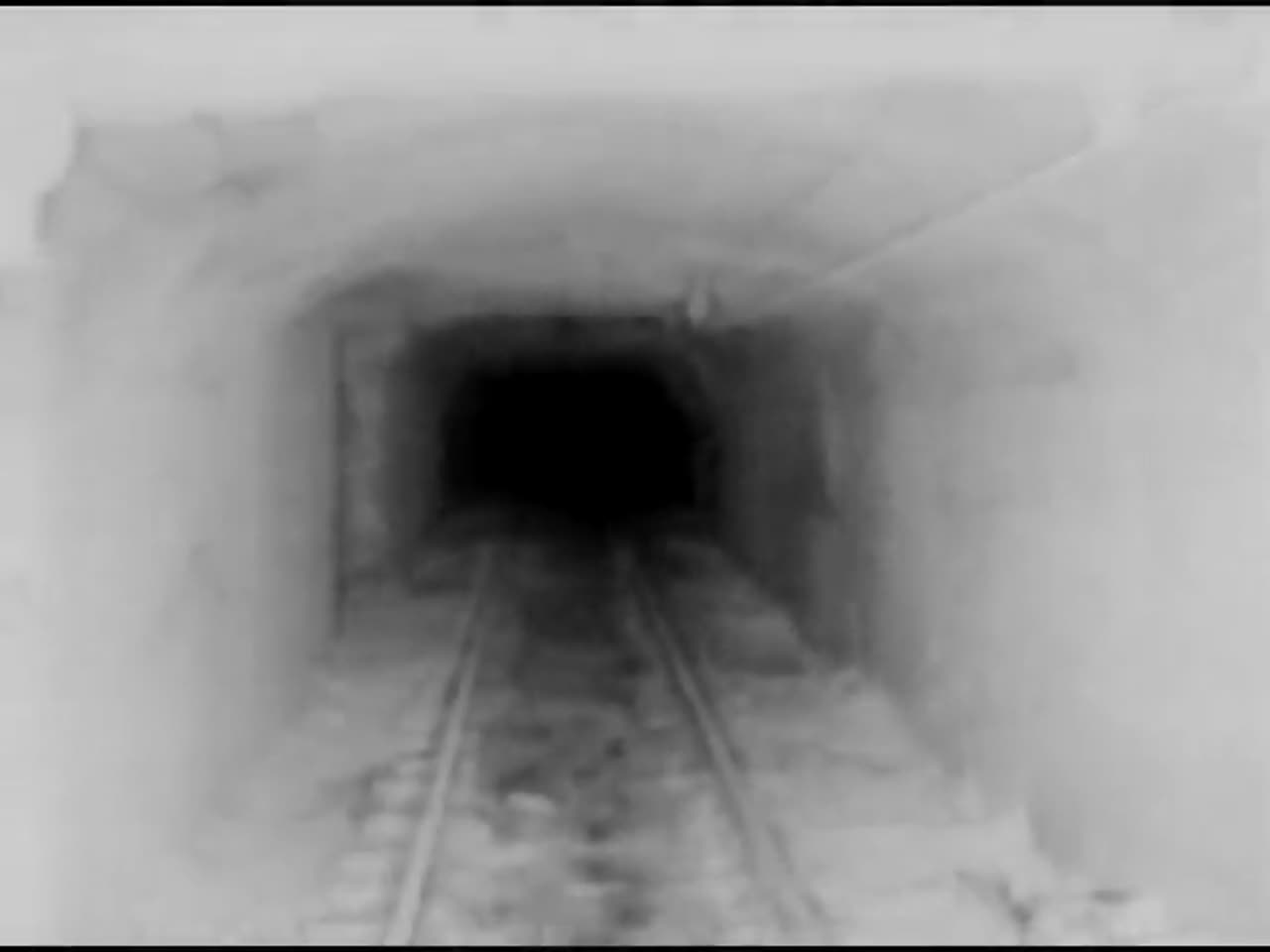
AftermineInfrastructure after extraction
Aftermine develops projects for closed and abandoned mines — starting with residual methane measurement and mitigation.
We help mine owners, public authorities and post-mining operators understand emissions, compare interventions and prepare sites for productive reuse.
Early-stage venture · first pilot partnerships in development
Seam to surface
- regrowththe next productive life
- surfacerestored, public again
- overburdenland & habitat
- workingsenergy & water recovered
- flooded zonemine-water heat
- the seammethane measured, destroyed
Schematic, not to scale.
The digital twin · model M-003
Orbit the mine. Run its futures.
A cutaway of the specimen mine with the abatement unit on the surface. Drag to orbit, flip the flooding scenario, scrub the years.
The problem
Closed mines don’t stop emitting.They stop being measured.
EU underground coal mines abandoned since 2015 could emit 185–200 kilotonnes of methane a year. Basic site information — including whether they are flooded — is still missing, and new EU rules now require it.
Closures 2015–2023, GEM asset-level dataset.
The ≈193 kt midpoint is a convention, not a probability.
34 of 53 mines. The biggest lever, and mostly unknown.
Regulation (EU) 2024/1787, Art. 26(2).
Figures from Aftermine’s EU abandoned-mine field study, each labelled by evidence type. The full inventory, the six largest sources and the method are on the research page.
What we do
From unknown liability to engineered project
Mine data, modelling, intervention design and performance evidence, in one project-development framework.
- 1
Assess
Sources, site conditions, data gaps and who is responsible.
- 2
Measure
Source-level measurement and monitoring, to the regulation.
- 3
Model
A digital mine for comparing gas, water and energy scenarios.
- 4
Design
Technology-neutral routes to control, recovery and treatment.
- 5
Verify
MRV that documents results, assumptions and uncertainty.
- 6
Reuse
Mine-water heat, renewable energy and land restoration.
Regulation · (EU) 2024/1787
The obligation has begun
Regulation (EU) 2024/1787 requires member states to inventory, measure, report and mitigate methane from closed and abandoned coal mines.
Next:
- 2027-02-05ahead
Mitigation plansArt. 26(1)
- 2030-01-01ahead
Venting & flaring prohibitedArt. 26(2)
Reviewed 2026-08-08. Applying this to a given site needs jurisdiction-specific legal and engineering advice.
Platform
One framework. Eight connected layers.
In the order a real site needs them — know it, model it, stop the leak, recover energy and water, validate the biology, restore the land, prove every number.
Pilot partnerships
Help build the first Aftermine pilot
We are looking for a closed-mine site where data, measurement and engineering partners can develop and validate an integrated methane project.
Who we want to hear from
- Mine owners and post-mining operators
- National, regional and local public authorities
- Methane measurement specialists
- Mine engineering and geotechnical firms
- Mitigation technology providers
- Regulatory and reporting specialists
- Universities and applied research institutions
- Energy, water and landscape partners
What an initial pilot could deliver
- A site and regulatory baseline
- A source-level measurement plan
- A digital mine and emissions model
- A methane mitigation options study
- A concept engineering package
- A monitoring and verification framework
- An assessment of wider energy and reuse opportunities
Case study
Auguste Victoria, reworked
The framework applied to a Ruhr colliery closed in 2015 — one of the largest modelled sources in our inventory. What could be built there, what is still unknown, and what field access would have to settle.
Independent research case study. It does not imply site access, operator involvement or an existing project relationship.
Get in touch
Put a closed mine back to work
If you operate a closed mine, oversee post-mining liabilities, or bring engineering, regulatory or measurement expertise — let’s talk about what a pilot could look like.
Also on this siteThe field studyInteractive researchAbout Aftermine